Discuss all things Model T related.
Forum rules
If you need help logging in, or have question about how something works, use the Support forum located here
Support Forum
Complete set of Forum Rules Forum Rules
-
Topic author
Darren J Wallace
- Posts: 368
- Joined: Sun Jan 06, 2019 11:43 am
- First Name: Darren
- Last Name: Wallace
- * REQUIRED* Type and Year of Model Ts owned: 1913 Canadian Touring 1905 Queen model B
- Location: Woodstock, Ontario, Canada
- Board Member Since: 2005
-
Contact:
Post
by Darren J Wallace » Sun Nov 30, 2025 2:18 pm
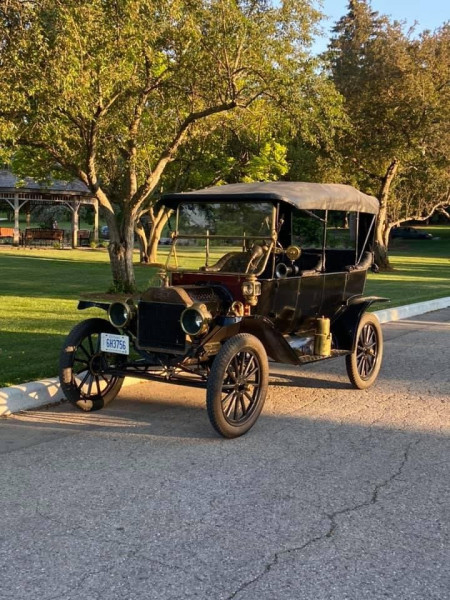
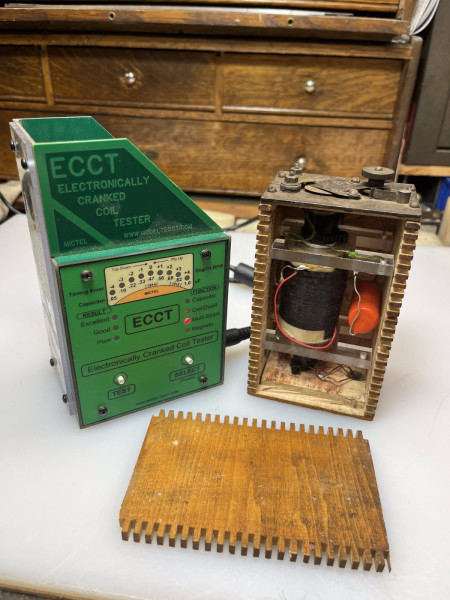
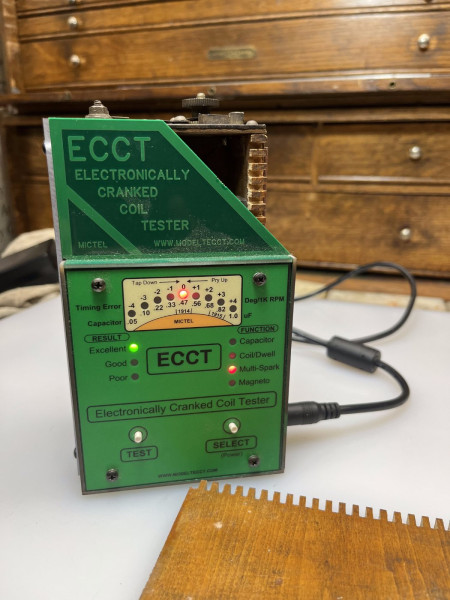
While my hand heals from surgery, I’m slowly getting back into doing things. I started out this weekend by doing something small and light, and for myself. I’ve had an unrestored spare set of late 1912 Heinze ignition coils for my [October 1912 build] 1913 Canadian Ford. I decided to rebuild them. Since my car is a very unrestored cosmetically, but very well maintained, and running car, my coils won’t be visually mint condition but mechanically they will be like new. Completely gutted with new primary and secondary windings used for the later Ford model T coils available from Lang’s or Snyder’s, and new correct capacitors. The original contact points have been carefully removed and new ones installed. Now that they have been calibrated on Mike Kossor’s awesome Heinze edition ECCT unit, I will be able to fill them with tar and they’ll be as good as new for the next 100 years!

These coils work very reliably! The set currently in my car has been giving me flawless performance for quite a few seasons with thousands of miles!
My grandfather bought this car from the original owner in July 1956 who purchased it new in November 1912
-
Attachments
-
-
-
1913 Canadian Touring & 1905 Queen, both cars are 4 generation family owned cars
-
Moxie26
- Posts: 2039
- Joined: Sun Jan 06, 2019 8:20 pm
- First Name: Robert
- Last Name: Jablonski
- * REQUIRED* Type and Year of Model Ts owned: 1926 Runabout
- Location: New Jersey
- MTFCA Life Member: YES
- Board Member Since: 1999
Post
by Moxie26 » Sun Nov 30, 2025 3:05 pm
Darren... Keep up the good work !
-
Russ T Fender
- Posts: 471
- Joined: Sun Jan 06, 2019 5:39 pm
- First Name: Val
- Last Name: Soupios
- * REQUIRED* Type and Year of Model Ts owned: '10 touring, '12 touring, '13 hack, '14 runabout, '14 touring, '14 speedster, '22 centerdoor, '27 touring
- Location: Jupiter Florida
Post
by Russ T Fender » Sun Nov 30, 2025 5:17 pm
Darren what did you use to open the case?
-
love2T's
- Posts: 267
- Joined: Thu Dec 12, 2024 8:47 am
- First Name: T
- Last Name: Gates
- * REQUIRED* Type and Year of Model Ts owned: 1913 Touring, 1926 Fordor
- Location: USA
- Board Member Since: 2019
Post
by love2T's » Sun Nov 30, 2025 6:08 pm
I love my Heinze coils in my '13. Over 19,000 miles on them and not had to do anything. But...if I ever feel a need to "tune them" maybe I can hire you!
-
Mark Gregush
- Posts: 5510
- Joined: Sat Jan 05, 2019 1:57 pm
- First Name: Mark
- Last Name: Gregush
- * REQUIRED* Type and Year of Model Ts owned: 1925 cutdown PU, 1948 F2 Ford flat head 6 pickup 3 speed
- Location: Portland Or
- Board Member Since: 1999
Post
by Mark Gregush » Mon Dec 01, 2025 10:21 am
The primary center core from the later coils is longer, how did you trim the end to fit the Heinze box?
https://www.modeltford.com/item/5007PR.aspxI know the voices aren't real but damn they have some good ideas!

1925 Cut down pickup
1948 Ford F2 pickup
-
Topic author
Darren J Wallace
- Posts: 368
- Joined: Sun Jan 06, 2019 11:43 am
- First Name: Darren
- Last Name: Wallace
- * REQUIRED* Type and Year of Model Ts owned: 1913 Canadian Touring 1905 Queen model B
- Location: Woodstock, Ontario, Canada
- Board Member Since: 2005
-
Contact:
Post
by Darren J Wallace » Mon Dec 01, 2025 10:45 am
I used the iron rods from the original Heinze core and very carefully packed the new primary coil as tight as possible. That way nothing needed to be modified.
I opened the case by forcing the side panel apart from the inside where the original capacitor is with a screwdriver and hammer like a pry bar. They mostly come apart without issue but if it breaks I just glue it back together and no one will ever know after careful repair.
The brownish potting material Heinze used is similar to the “cement” used inside pre-1900 Swiss cylinder music boxes that I restore. It’s a recipe of rosin, shellac, and pulverized brick. I actually use type two roofing tar to fill them and save that cement for my music box work.
9 times out of 10, the original cement has lost its bond to the inside of the coil box and there’s actually not that much in them because the original secondary’s took up a lot of room.
1913 Canadian Touring & 1905 Queen, both cars are 4 generation family owned cars
-
Mark Gregush
- Posts: 5510
- Joined: Sat Jan 05, 2019 1:57 pm
- First Name: Mark
- Last Name: Gregush
- * REQUIRED* Type and Year of Model Ts owned: 1925 cutdown PU, 1948 F2 Ford flat head 6 pickup 3 speed
- Location: Portland Or
- Board Member Since: 1999
Post
by Mark Gregush » Mon Dec 01, 2025 11:14 am
Thank you. I used the rods from the later coil testing things out. I will try the original rods but was not sure if I could get them back in the new primary after playing pick-up sticks.

I know the voices aren't real but damn they have some good ideas!
1925 Cut down pickup
1948 Ford F2 pickup
-
Topic author
Darren J Wallace
- Posts: 368
- Joined: Sun Jan 06, 2019 11:43 am
- First Name: Darren
- Last Name: Wallace
- * REQUIRED* Type and Year of Model Ts owned: 1913 Canadian Touring 1905 Queen model B
- Location: Woodstock, Ontario, Canada
- Board Member Since: 2005
-
Contact:
Post
by Darren J Wallace » Mon Dec 01, 2025 11:34 am
No problem! It’s time consuming but you only have to do it for four coils
I get them tight enough that you need to lightly tap the last ones in with a brass hammer very carefully, then I tie them up tight with mechanical wire at each end to prevent migrating. You can separate the original core rods with some light persuasion in your bench vise. They’re coated in paraffin wax which helps get them all in their new home. Three original cores is more than enough iron rods for 4 new coil cores.
The set in my car is 6 years old. No issues.
1913 Canadian Touring & 1905 Queen, both cars are 4 generation family owned cars
-
RGould1910
- Posts: 1213
- Joined: Tue Jan 22, 2019 8:16 am
- First Name: Richard
- Last Name: Gould
- * REQUIRED* Type and Year of Model Ts owned: 1910 touring, 1912 roadster , 1927 roadster
- Location: Folsom, CA
Post
by RGould1910 » Mon Dec 01, 2025 10:17 pm
I heard Canadian cars used 30 x 3 1/2 tires on nondemountable wheels all around, at least for some years. Your car seems to bear that out.
-
Topic author
Darren J Wallace
- Posts: 368
- Joined: Sun Jan 06, 2019 11:43 am
- First Name: Darren
- Last Name: Wallace
- * REQUIRED* Type and Year of Model Ts owned: 1913 Canadian Touring 1905 Queen model B
- Location: Woodstock, Ontario, Canada
- Board Member Since: 2005
-
Contact:
Post
by Darren J Wallace » Tue Dec 02, 2025 9:10 am
That is correct.
1913 Canadian Touring & 1905 Queen, both cars are 4 generation family owned cars
-
Mark Gregush
- Posts: 5510
- Joined: Sat Jan 05, 2019 1:57 pm
- First Name: Mark
- Last Name: Gregush
- * REQUIRED* Type and Year of Model Ts owned: 1925 cutdown PU, 1948 F2 Ford flat head 6 pickup 3 speed
- Location: Portland Or
- Board Member Since: 1999
Post
by Mark Gregush » Tue Dec 02, 2025 11:53 am
Darren J Wallace wrote: ↑Mon Dec 01, 2025 11:34 am
No problem! It’s time consuming but you only have to do it for four coils
I get them tight enough that you need to lightly tap the last ones in with a brass hammer very carefully, then I tie them up tight with mechanical wire at each end to prevent migrating. You can separate the original core rods with some light persuasion in your bench vise. They’re coated in paraffin wax which helps get them all in their new home. Three original cores is more than enough iron rods for 4 new coil cores.
The set in my car is 6 years old. No issues.
Thank you!
I know the voices aren't real but damn they have some good ideas!
1925 Cut down pickup
1948 Ford F2 pickup
-
Topic author
Darren J Wallace
- Posts: 368
- Joined: Sun Jan 06, 2019 11:43 am
- First Name: Darren
- Last Name: Wallace
- * REQUIRED* Type and Year of Model Ts owned: 1913 Canadian Touring 1905 Queen model B
- Location: Woodstock, Ontario, Canada
- Board Member Since: 2005
-
Contact:
Post
by Darren J Wallace » Tue Dec 02, 2025 1:02 pm
You’re very welcome!

1913 Canadian Touring & 1905 Queen, both cars are 4 generation family owned cars
-
JTT3
- Posts: 1966
- Joined: Sun Jan 06, 2019 11:57 am
- First Name: John
- Last Name: Tannehill
- Location: Hot Coffee, MS
- Board Member Since: 2002
Post
by JTT3 » Wed Dec 03, 2025 11:39 pm
Darren are you squeezing the secondary around the original core & tying wire below & above the secondary windings? Did you make the stabilization plates out of plexiglass?
I really wish that you would share on a thread the specifics so some of us that have these early coils can try our hands at duplicating your work. Thanks ever so much for sharing what you’re doing on this thread. Best John
-
Topic author
Darren J Wallace
- Posts: 368
- Joined: Sun Jan 06, 2019 11:43 am
- First Name: Darren
- Last Name: Wallace
- * REQUIRED* Type and Year of Model Ts owned: 1913 Canadian Touring 1905 Queen model B
- Location: Woodstock, Ontario, Canada
- Board Member Since: 2005
-
Contact:
Post
by Darren J Wallace » Thu Dec 04, 2025 6:59 am
Hi John, you are correct on all accounts! I will post some more photos and details of exactly the things you mentioned in further details a little later.

1913 Canadian Touring & 1905 Queen, both cars are 4 generation family owned cars
-
Topic author
Darren J Wallace
- Posts: 368
- Joined: Sun Jan 06, 2019 11:43 am
- First Name: Darren
- Last Name: Wallace
- * REQUIRED* Type and Year of Model Ts owned: 1913 Canadian Touring 1905 Queen model B
- Location: Woodstock, Ontario, Canada
- Board Member Since: 2005
-
Contact:
Post
by Darren J Wallace » Thu Dec 04, 2025 9:18 am
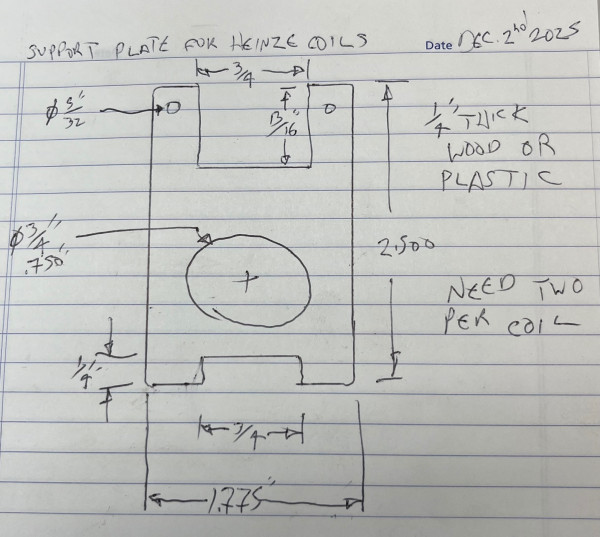
Here’s a simple drawing of the two support plates that I used in the Heinze coils. I made these on a milling machine but you can do this any way you wish. I’ve used both wood and plexiglass for the material. The slots are there only to allow the potting tar to get all through the coil. The only important measurements are the location of the hole for the primary core to go through, and the outside dimensions.
-
Attachments
-
Last edited by
Darren J Wallace on Thu Dec 04, 2025 3:30 pm, edited 1 time in total.
1913 Canadian Touring & 1905 Queen, both cars are 4 generation family owned cars
-
Topic author
Darren J Wallace
- Posts: 368
- Joined: Sun Jan 06, 2019 11:43 am
- First Name: Darren
- Last Name: Wallace
- * REQUIRED* Type and Year of Model Ts owned: 1913 Canadian Touring 1905 Queen model B
- Location: Woodstock, Ontario, Canada
- Board Member Since: 2005
-
Contact:
Post
by Darren J Wallace » Thu Dec 04, 2025 9:29 am
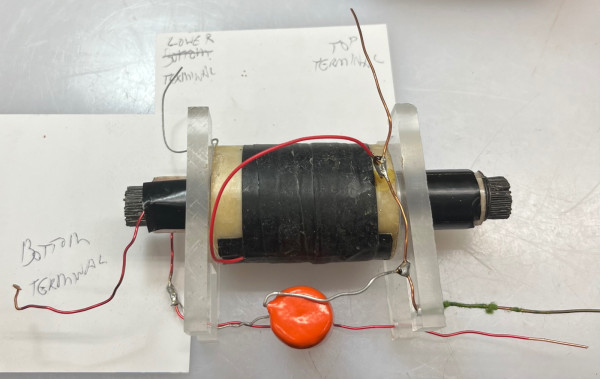
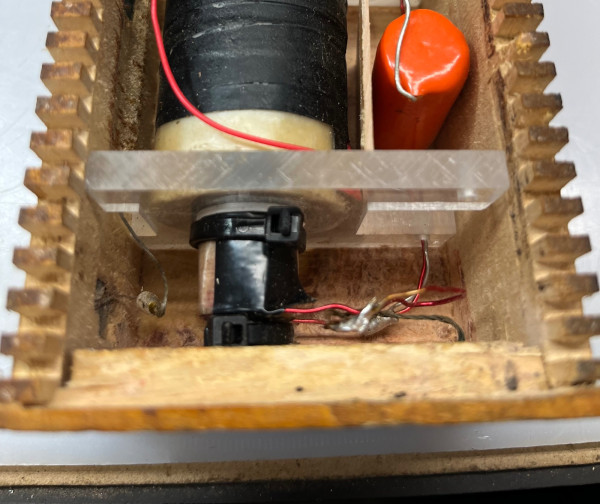
When you assemble everything, I used zip ties to hold the plastic plates lightly snug against the secondary coil. I used mechanical wire to hold the core snug on the primary coil. You can see where I have installed the first one on the right end of the coil. As long as the original iron core rods are good and tight in the cardboard tube, don’t get too hung up on how tight the zip ties are. They need to be tight of course but when the tar is poured in, everything will be solidly frozen in place. You just need them to hold everything from moving before tar is poured as it’s important to test the coil before committing the tar. The iron core rods MUST be tight enough that it is difficult to slide them all by hand. You should have to install the last of them with a small hammer.
If you lost any shims that were underneath the original primary core, the core top wants to be just slightly under the top of the top metal plate to flush. Within 1/64”.
Remember you are pouring the tar in from the top with all four panels of the coil assembled.
-
Attachments
-
Last edited by
Darren J Wallace on Thu Dec 04, 2025 3:33 pm, edited 2 times in total.
1913 Canadian Touring & 1905 Queen, both cars are 4 generation family owned cars
-
Topic author
Darren J Wallace
- Posts: 368
- Joined: Sun Jan 06, 2019 11:43 am
- First Name: Darren
- Last Name: Wallace
- * REQUIRED* Type and Year of Model Ts owned: 1913 Canadian Touring 1905 Queen model B
- Location: Woodstock, Ontario, Canada
- Board Member Since: 2005
-
Contact:
Post
by Darren J Wallace » Thu Dec 04, 2025 9:34 am
Some more notes:
When I’m ready to pour tar, I’ll post more pics.
Also, you CANNOT use original Heinze electrical specs when setting up the finished coil! You have to now treat this coil like you would a regular later coil, I’m also using all new primary and secondary coils available from Lang’s and Snyder’s. I have not tried using any original wiring. I made a special adapter to use on a Strobospark, HCCT, or get Mike Kossor’s Heinze edition ECCT.
I have had excellent results changing just the points on original Heinze parts which I’ll post pics of too later.
Last edited by
Darren J Wallace on Thu Dec 04, 2025 12:17 pm, edited 1 time in total.
1913 Canadian Touring & 1905 Queen, both cars are 4 generation family owned cars
-
Topic author
Darren J Wallace
- Posts: 368
- Joined: Sun Jan 06, 2019 11:43 am
- First Name: Darren
- Last Name: Wallace
- * REQUIRED* Type and Year of Model Ts owned: 1913 Canadian Touring 1905 Queen model B
- Location: Woodstock, Ontario, Canada
- Board Member Since: 2005
-
Contact:
Post
by Darren J Wallace » Thu Dec 04, 2025 10:27 am
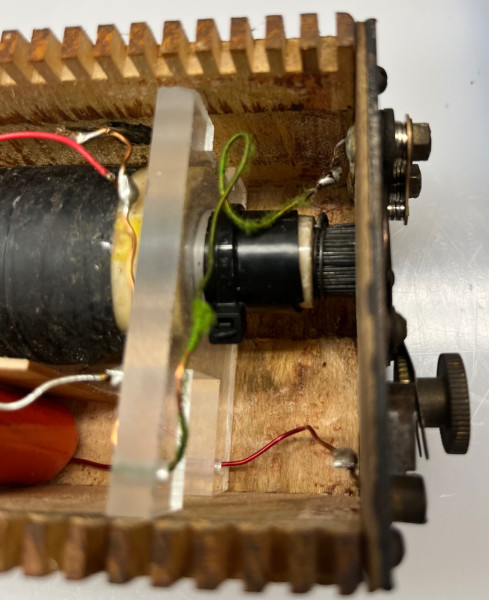
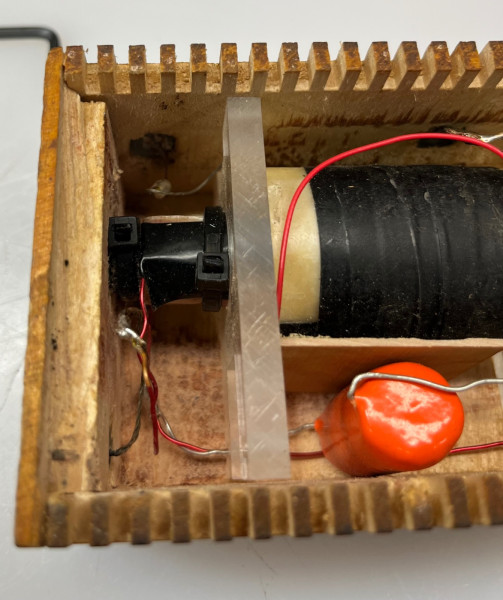
Zip tie details
-
Attachments
-
-
1913 Canadian Touring & 1905 Queen, both cars are 4 generation family owned cars
-
Topic author
Darren J Wallace
- Posts: 368
- Joined: Sun Jan 06, 2019 11:43 am
- First Name: Darren
- Last Name: Wallace
- * REQUIRED* Type and Year of Model Ts owned: 1913 Canadian Touring 1905 Queen model B
- Location: Woodstock, Ontario, Canada
- Board Member Since: 2005
-
Contact:
Post
by Darren J Wallace » Thu Dec 04, 2025 10:30 am
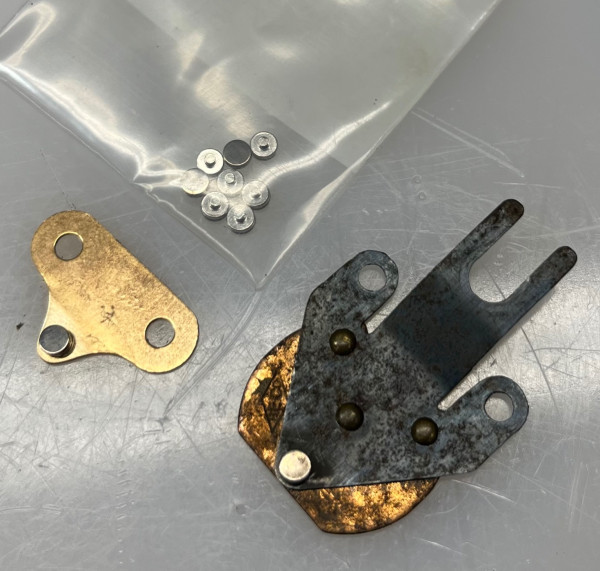
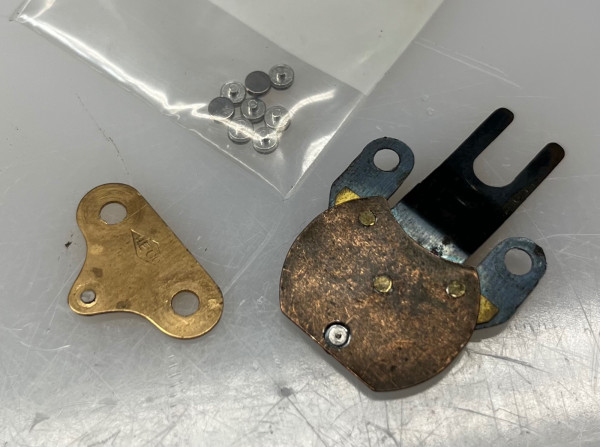
I used a 1/8” end mill carefully in my milling machine to access the point rivet. You must drill out the original hole to .062” to accept the new point rivet. Care must be taken not to distort the original parts. I use a machinery bench block to insert the old point side to carefully punch out the old point. You will trash your 1/16” drill drilling out the hardened spring material so drill the brass upper rigid point first!
-
Attachments
-
-
Last edited by
Darren J Wallace on Thu Dec 04, 2025 3:35 pm, edited 1 time in total.
1913 Canadian Touring & 1905 Queen, both cars are 4 generation family owned cars
-
Topic author
Darren J Wallace
- Posts: 368
- Joined: Sun Jan 06, 2019 11:43 am
- First Name: Darren
- Last Name: Wallace
- * REQUIRED* Type and Year of Model Ts owned: 1913 Canadian Touring 1905 Queen model B
- Location: Woodstock, Ontario, Canada
- Board Member Since: 2005
-
Contact:
Post
by Darren J Wallace » Thu Dec 04, 2025 10:34 am
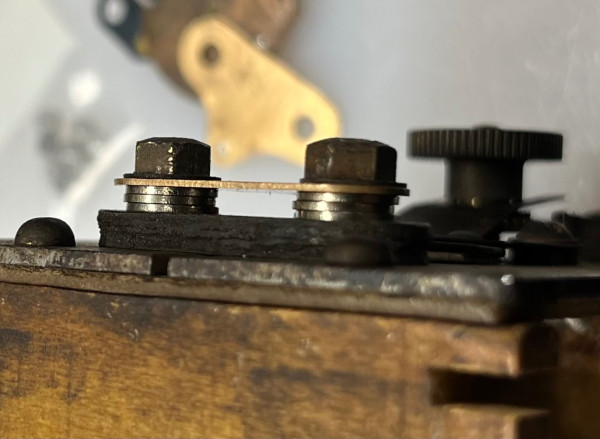
Because of the larger thicker points you will have to raise the upper stationary point considerably. In this case it worked out to just a few thousand shy of 3/32”. I use washers as shims to get the height right, then once I’m happy with the thickness required, I machine black plastic spacers which look less obtrusive.
-
Attachments
-
Last edited by
Darren J Wallace on Thu Dec 04, 2025 3:35 pm, edited 1 time in total.
1913 Canadian Touring & 1905 Queen, both cars are 4 generation family owned cars
-
Topic author
Darren J Wallace
- Posts: 368
- Joined: Sun Jan 06, 2019 11:43 am
- First Name: Darren
- Last Name: Wallace
- * REQUIRED* Type and Year of Model Ts owned: 1913 Canadian Touring 1905 Queen model B
- Location: Woodstock, Ontario, Canada
- Board Member Since: 2005
-
Contact:
Post
by Darren J Wallace » Thu Dec 04, 2025 10:36 am
You will also have to bend the vibrator in many cases to get the adjustment within the range of the adjustment knob. It takes some patience but once it’s done, you’re done. The set in my car currently has run fault free for 6 years. I’ll post pics when I’m ready to pour tar.
Last edited by
Darren J Wallace on Thu Dec 04, 2025 12:18 pm, edited 1 time in total.
1913 Canadian Touring & 1905 Queen, both cars are 4 generation family owned cars
-
Topic author
Darren J Wallace
- Posts: 368
- Joined: Sun Jan 06, 2019 11:43 am
- First Name: Darren
- Last Name: Wallace
- * REQUIRED* Type and Year of Model Ts owned: 1913 Canadian Touring 1905 Queen model B
- Location: Woodstock, Ontario, Canada
- Board Member Since: 2005
-
Contact:
Post
by Darren J Wallace » Thu Dec 04, 2025 10:39 am
Another photo
-
Attachments
-
1913 Canadian Touring & 1905 Queen, both cars are 4 generation family owned cars
-
Scott_Conger
- Posts: 6731
- Joined: Sun Jan 06, 2019 11:18 am
- First Name: Scott
- Last Name: Conger
- * REQUIRED* Type and Year of Model Ts owned: 1919
- Location: not near anywhere, WY
- Board Member Since: 2005
Post
by Scott_Conger » Thu Dec 04, 2025 2:03 pm
Kudos, Darren
Scott Conger
Tyranny under the guise of law is still Tyranny
NH Full Flow Float Valves™
Obsolete carburetor parts manufactured
-
Mark Gregush
- Posts: 5510
- Joined: Sat Jan 05, 2019 1:57 pm
- First Name: Mark
- Last Name: Gregush
- * REQUIRED* Type and Year of Model Ts owned: 1925 cutdown PU, 1948 F2 Ford flat head 6 pickup 3 speed
- Location: Portland Or
- Board Member Since: 1999
Post
by Mark Gregush » Thu Dec 04, 2025 4:05 pm
Cut and paste everything into a file and submit to the Vintage Ford for publication. This is what the club magazine needs more of! Thank you for taking time to put this together.
I know the voices aren't real but damn they have some good ideas!
1925 Cut down pickup
1948 Ford F2 pickup
-
MKossor
- Posts: 539
- Joined: Sun Jan 06, 2019 7:30 pm
- First Name: Mike
- Last Name: Kossor
- * REQUIRED* Type and Year of Model Ts owned: 1927 Touring
- Location: Kenilworth, NJ 07033
Post
by MKossor » Thu Dec 04, 2025 8:39 pm
The Heinze coil design is actually superior to the Ford/KW coil design.
Its unfortunate the Heinze coil has earned a poor reputation for performance because of the limitations of the test and tuning methodologies available back in the day. That's because tuning a Heinze coil using average current as an indirect approximation of time to fire spark (ie using a HCCT, Strob-o-Spark or Buzz Box) almost guarantees improper adjustment and terrible engine ignition performance.
Tuning Heinze coils for equal time to fire spark by actually measuring dwell time to fire spark (time to fire tuning method) results results in excellent engine ignition timing accuracy with excellent firing consistency even at very high firing rates (5000 RPM).
The Heinze coil design is a superior design because adjusting firing time simply requires turning the adjustment knob. No tapping down or prying up on the vibrator spring. Coil firing consistency is guaranteed by design; as opposed to tweaking the cushion spring tension trying to find a balance between cushion spring tension and vibrator spring tension that's just right to achieve excellent firing time consistency. A process that can take considerable time if the limit rivet length is longer than specified by Ford.
Sadly, many early Ford Model Ts were modified with distributor ignition or fitted with later Ford or KW coil boxes to achieve improved ignition performance when all that was necessary is a more accurate tuning method.
-
Topic author
Darren J Wallace
- Posts: 368
- Joined: Sun Jan 06, 2019 11:43 am
- First Name: Darren
- Last Name: Wallace
- * REQUIRED* Type and Year of Model Ts owned: 1913 Canadian Touring 1905 Queen model B
- Location: Woodstock, Ontario, Canada
- Board Member Since: 2005
-
Contact:
Post
by Darren J Wallace » Sat Dec 13, 2025 3:41 pm
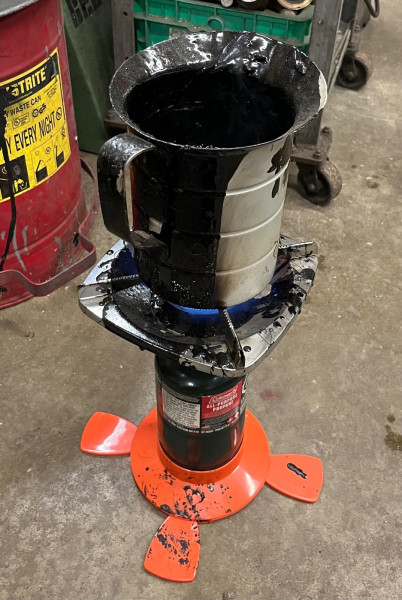
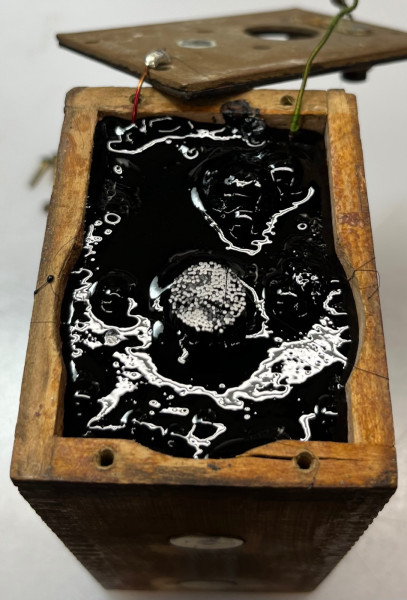
Decided today to pour some tar into the refurbished Heinze coils. I strongly suggest you test the performance of your coils before committing to pour the tar because trying to undo rebuilding them after fresh tar is not going to be fun if not just plain impossible. Haven’t had to do that ever and don’t plan to either!
1913 Canadian Touring & 1905 Queen, both cars are 4 generation family owned cars
-
Topic author
Darren J Wallace
- Posts: 368
- Joined: Sun Jan 06, 2019 11:43 am
- First Name: Darren
- Last Name: Wallace
- * REQUIRED* Type and Year of Model Ts owned: 1913 Canadian Touring 1905 Queen model B
- Location: Woodstock, Ontario, Canada
- Board Member Since: 2005
-
Contact:
Post
by Darren J Wallace » Sat Dec 13, 2025 3:44 pm
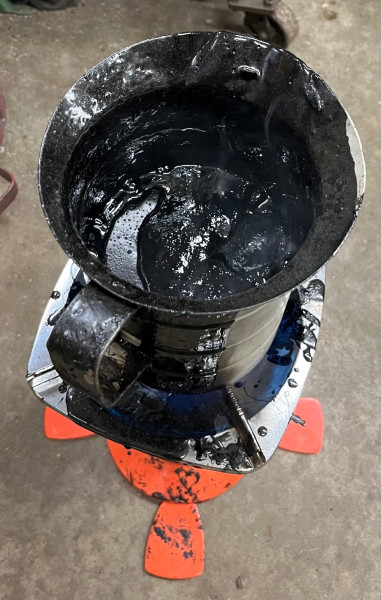
My tar pot set up:
-
Attachments
-
-
1913 Canadian Touring & 1905 Queen, both cars are 4 generation family owned cars
-
Topic author
Darren J Wallace
- Posts: 368
- Joined: Sun Jan 06, 2019 11:43 am
- First Name: Darren
- Last Name: Wallace
- * REQUIRED* Type and Year of Model Ts owned: 1913 Canadian Touring 1905 Queen model B
- Location: Woodstock, Ontario, Canada
- Board Member Since: 2005
-
Contact:
Post
by Darren J Wallace » Sat Dec 13, 2025 3:46 pm
The coil after a very careful, and SLOW pour. Watch for burps and fill slowly as needed.
-
Attachments
-
1913 Canadian Touring & 1905 Queen, both cars are 4 generation family owned cars
-
Mark Gregush
- Posts: 5510
- Joined: Sat Jan 05, 2019 1:57 pm
- First Name: Mark
- Last Name: Gregush
- * REQUIRED* Type and Year of Model Ts owned: 1925 cutdown PU, 1948 F2 Ford flat head 6 pickup 3 speed
- Location: Portland Or
- Board Member Since: 1999
Post
by Mark Gregush » Sun Dec 14, 2025 8:40 am
Why not pour from the side with just enough tar to hold things in place like the later coils. That is how I would do it.
In any case nice job!
I know the voices aren't real but damn they have some good ideas!
1925 Cut down pickup
1948 Ford F2 pickup
-
Topic author
Darren J Wallace
- Posts: 368
- Joined: Sun Jan 06, 2019 11:43 am
- First Name: Darren
- Last Name: Wallace
- * REQUIRED* Type and Year of Model Ts owned: 1913 Canadian Touring 1905 Queen model B
- Location: Woodstock, Ontario, Canada
- Board Member Since: 2005
-
Contact:
Post
by Darren J Wallace » Sun Dec 14, 2025 8:53 am
Thanks! You could tape up and seal the hole in the top plate where the primary core goes through easy enough. It's a lot bigger in diameter than the core. But then the top plate could be stuck. That wouldn't really matter that much if there's nothing wrong with it. I guess I just prefer to be able to remove the top plate, but that's just my personal opinion. Either way would work good. Glad everyone is taking an interest in my post! The only other thing I could add is the tar does hold all 4 wood panels like glue so having one loose would mean a better chance of renewal 100 years from now! I just reassembled them the way they were dismantled

Thanks for adding an important option I didn't think of! Cheers!
1913 Canadian Touring & 1905 Queen, both cars are 4 generation family owned cars
-
Mark Gregush
- Posts: 5510
- Joined: Sat Jan 05, 2019 1:57 pm
- First Name: Mark
- Last Name: Gregush
- * REQUIRED* Type and Year of Model Ts owned: 1925 cutdown PU, 1948 F2 Ford flat head 6 pickup 3 speed
- Location: Portland Or
- Board Member Since: 1999
Post
by Mark Gregush » Mon Dec 15, 2025 9:44 am
I would have to check the number, but the later insulating piece that goes under the metal top cover has smaller hole for the core, at least the ones I got from Langs did. Think the 1913 style? See your point about pouring the tar.
I know the voices aren't real but damn they have some good ideas!
1925 Cut down pickup
1948 Ford F2 pickup
-
Topic author
Darren J Wallace
- Posts: 368
- Joined: Sun Jan 06, 2019 11:43 am
- First Name: Darren
- Last Name: Wallace
- * REQUIRED* Type and Year of Model Ts owned: 1913 Canadian Touring 1905 Queen model B
- Location: Woodstock, Ontario, Canada
- Board Member Since: 2005
-
Contact:
Post
by Darren J Wallace » Sun Jan 11, 2026 8:31 pm
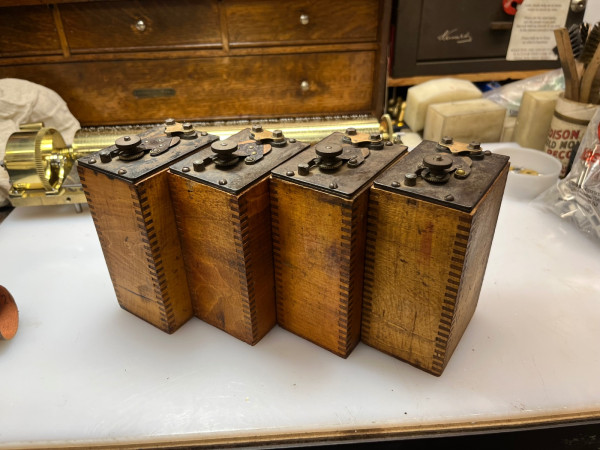
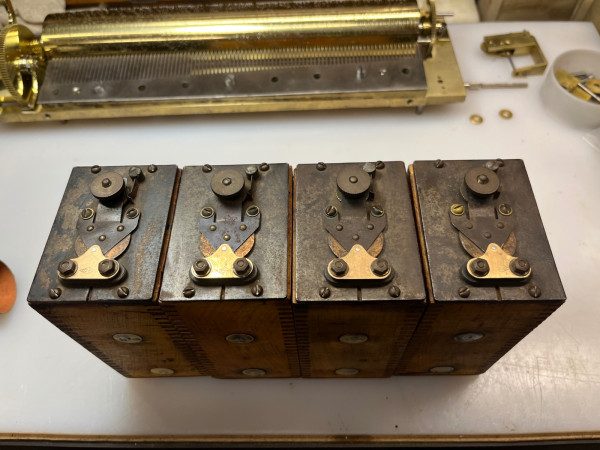
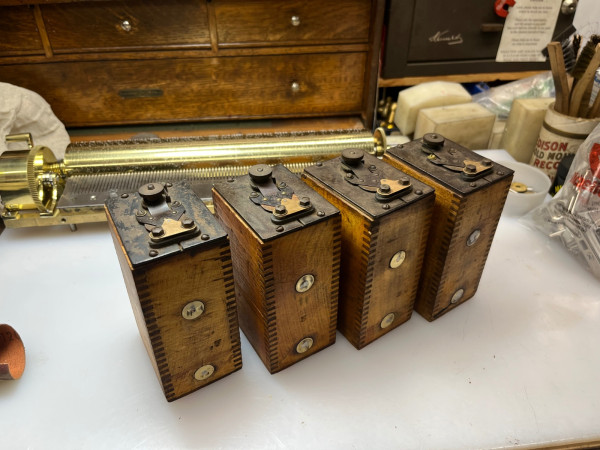
Finally finished the whole set. I wanted this set to look old. My car looks old, the coil box looks old, but they operate like champions! New points, capacitors, windings, and using all the original Heinze hardware.
-
Attachments
-
-
-
1913 Canadian Touring & 1905 Queen, both cars are 4 generation family owned cars
-
Moxie26
- Posts: 2039
- Joined: Sun Jan 06, 2019 8:20 pm
- First Name: Robert
- Last Name: Jablonski
- * REQUIRED* Type and Year of Model Ts owned: 1926 Runabout
- Location: New Jersey
- MTFCA Life Member: YES
- Board Member Since: 1999
Post
by Moxie26 » Sun Jan 11, 2026 9:13 pm
Darren ... Great rewarding work !


